
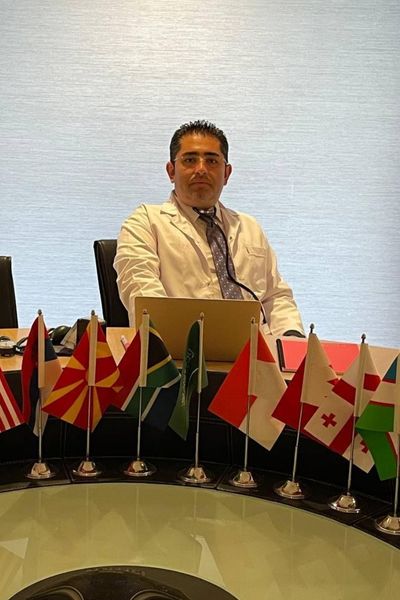
Interactive Spotlight: Unveiling the Art and Science Behind Doctor Behzad Mehr’s Facial Symmetry Mastery
Welcome to an Interactive exploration of the art and science behind Doctor Behzad Mehr‘s renowned facial symmetry mastery. In this feature, we dive into how balance, proportion, and nuance come together to create harmonious results. The aim is to illuminate the facial symmetry journey with engaging, hands-on insights that readers can relate to and reflect upon.
Facial symmetry is the alignment of features along vertical and horizontal planes. Our Interactive spotlight reveals how surgeons analyze angles, proportions, and tissue dynamics. Key concepts include the golden ratio, vertical thirds, horizontal harmony, and soft-tissue support. The narrative emphasizes that facial symmetry is both a precise science and a nuanced art.
Doctor Behzad Mehr blends meticulous measurements with an aesthetic sense honed by years of practice. This section invites readers to explore case profiles, before-and-after visuals, and the decision-making process that guides each intervention. Expect insights into planning, patient consultation, and customization that honors individuality while achieving symmetry.
- Assessment: Digital symmetry mapping, contour analysis, and patient goals.
- Planning: Proportional adjustments, vector planning, and tissue handling strategies.
- Execution: Simulation tools, precise grafting or implant placement, and real-time feedback.
- Result: Balanced features, natural expression, and long-term stability.
Readers are encouraged to engage with the Interactive elements of this case study, reflecting on how each decision contributes to the overall symmetry and aesthetic balance.
- Rhinoplasty and Nasal Symmetry: Aligning the nasal framework with facial thirds and vertical axes.
- Cheek and Midface Modulation: Restoring volume to support symmetry and youthful contours.
- Lip and Perioral Balance: Harmonizing lip support with smile lines and philtral definition.
- Jawline and Contour: Refinement to create symmetrical lower face architecture.
Each technique is presented with interactive visuals and practical takeaways for readers exploring facial symmetry enhancement.
The Interactive Spotlight emphasizes transparent consultations, risk discussions, and setting achievable goals. It highlights how Doctor Behzad Mehr respects individuality, avoids overcorrection, and prioritizes safety and natural results. The narrative reinforces that true symmetry respects ethnic and personal identity while enhancing harmony.
In this Interactive segment, readers can submit questions about facial symmetry, the role of Doctor Behzad Mehr, and the decision-making process behind common treatment plans. Expert responses illustrate best practices, patient element considerations, and timelines for recovery.
Interactive Odyssey: How Precise Techniques and Patient-Centered Vision Shape Facial Harmony with Doctor Behzad Mehr
Interactive exploration invites you to follow the step-by-step journey where meticulous surgical precision intertwines with a patient’s unique identity. In this odyssey, every measurement, angle, and contour is calibrated not only for harmony but for an expression that remains unmistakably you. Through dynamic demonstrations and virtual simulations, readers experience how exacting techniques coalesce with a patient-centered blueprint to craft balanced, natural results.
Begin with a digital diagnostic that maps the face in three planes: vertical symmetry, horizontal proportion, and depth of soft tissue. By engaging with a living model of the patient’s features, you can observe how small shifts in projection or contour influence the overall balance. This interactive module emphasizes that facial harmony is achieved not by uniform alteration, but by tailored adjustments that respect ethnicity, age, and individual expression.
Explore how targeted procedures align with a person’s facial thirds and subunits. Interactive visuals demonstrate:
Rhinoplasty Alignment: Calibrating nasal height and projection to harmonize with the midface, without sacrificing character.
Cheek and Midface Augmentation: Restoring volume to support symmetry while preserving natural sag stability.
Lip-Perioral Balance: Fine-tuning shouldering of the lips in relation to smile dynamics and philtral definition.
Jawline Contouring: Sculpting contours to achieve a symmetrical lower third that complements overall balance.
Each technique is presented with interactive sliders and scenario simulations, enabling readers to experiment with different degrees of change while assessing impact on the facial tapestry as a whole.
The Interactive Odyssey foregrounds a transparent consultation process. Participants can engage with decision trees that explore risk, recovery timelines, and long-term stability. The content reinforces that true symmetry honors the patient’s lifestyle, cultural background, and personal aspirations. It also stresses the importance of communicating limitations candidly to prevent overcorrection and ensure sustainable, natural outcomes.
Interactive case visuals guide you through the journey:
Assessment: Digital mapping aligns facial architecture with patient-voiced goals.
Planning: Vector analysis and tissue dynamics inform a bespoke plan.
Execution: Precision tools simulate graft placement and contour refinement.
Outcome: Durable harmony that preserves individuality and expression.
Readers can pause at critical decision points, reflect on the rationale behind each choice, and compare potential outcomes before making a real-world commitment.
This module reinforces ethical practice: informed consent, risk acknowledgment, and setting attainable expectations. By emphasizing safety nets, long-term results, and natural aesthetics, the Interactive Odyssey sustains a patient-first philosophy that underpins every enhancement performed by Doctor Behzad Mehr.
