
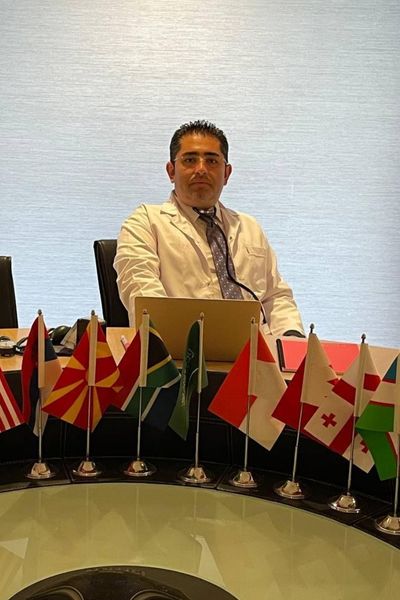
Interactive Insight: Unveiling the Art and Science of Doctor Behzad Mehr Nose Bridge Correction
Interactive Insight invites you to explore the nuanced world of nose bridge correction, featuring Doctor Behzad Mehr and his expert approach to surgical artistry and scientific precision. This article uses a dynamic, reader-driven narrative to reveal how anatomy, aesthetics, and technique converge to shape outcomes. Interactive Insight: Unveiling the Art and Science of Doctor Behzad Mehr Nose Bridge Correction sets the stage for an engaging discussion about safety, expectations, and care.
To appreciate the nose bridge correction, one must understand the underlying anatomy — nasal bones, cartilage, and soft tissue. Doctor Behzad Mehr combines anatomical knowledge with aesthetic goals to craft a nose bridge that harmonizes with facial features. In this section, readers can explore how proportion, symmetry, and profile contribute to a balanced outcome in a simulated, interactive way.
Doctor Behzad Mehr emphasizes a patient-centric philosophy, prioritizing safety, natural results, and minimal downtime. The interactive narrative highlights planning stages, such as preoperative assessment, 3D imaging, and mock simulations that help patients visualize post-surgical results.
This section outlines surgical strategies employed by Doctor Behzad Mehr, including dorsum augmentation or reduction, radix refinement, and soft tissue optimization. The emphasis is on precision, scar minimization, and preservation of nasal function. Through immersive prompts, readers learn how technique choices influence the final bridge shape, projection, and tip support.
Safety comes first in any nose surgery. Interactive examples articulate potential risks, such as infection or asymmetry, and how Doctor Behzad Mehr mitigates them with meticulous technique and postoperative care. Recovery timelines, swelling patterns, and guidance on activity restrictions are presented in a clear, user-friendly format.
Case studies and anonymized patient journeys illustrate nose bridge correction results achieved by Doctor Behzad Mehr. The interactive gallery demonstrates how subtle changes can dramatically affect facial harmony, while preserving natural expression and function.
Prospective patients are given a practical checklist to prepare for consultation with Doctor Behzad Mehr. Key questions cover surgical goals, risk management, anesthesia options, recovery expectations, and long-term care. This section empowers readers to make informed decisions about nose bridge correction.
Interactive Insight concludes with a synthesis of art and science, highlighting how Doctor Behzad Mehr approaches each case as a unique collaboration between patient ambition and medical expertise. The article invites ongoing dialogue and encourages readers to explore further information through interactive prompts and expert commentary.
Dynamic Pathways to Precision: Exploring Innovative Techniques in Nose Bridge Correction with Doctor Behzad Mehr
Dynamic Pathways to Precision invites you into a collaborative exploration with Doctor Behzad Mehr, where innovation meets individualized planning. In this interactive segment, you’ll navigate how cutting-edge techniques adapt to unique nasal anatomies, ensuring a bridge correction that maintains natural expression while achieving your aesthetic goals.
Every nose carries a distinct blueprint. Through guided simulations, readers engage with patient-specific data such as dorsal height, radix location, and skin thickness. The interactive model demonstrates how adjustments in projection and contour influence facial balance, illustrating the principle that precision arises from customization.
Doctor Behzad Mehr employs a spectrum of techniques, chosen to preserve function while delivering refined aesthetics. Explore dorsum augmentation or reduction, refined radix shaping, and strategic grafting options. Interactive prompts reveal how graft type, size, and placement alter the bridge’s silhouette and longevity, highlighting the correlation between structural support and soft tissue harmony.
The bridge correction process interplays with tip projection and radix depth. In this section, you’ll engage with models showing how subtle changes in the nasal base impact the overall profile. By adjusting support mechanisms—whether through cartilage preservation, columellar strut refinement, or pocket grafting—you gain insight into achieving a cohesive, natural-looking outcome.
Interactive demonstrations summarize how tissue elasticity, scar formation, and vascular integrity guide surgical choices. Doctor Mehr integrates biophysical data with aesthetic intent, teaching how careful incision planning and atraumatic handling minimize downtime while preserving function.
Dynamic risk assessment scenarios help you recognize potential complications and the safeguards used to mitigate them. This portion emphasizes patient education, informed consent, and the role of postoperative care in sustaining results over time.
Access anonymized case galleries and 3D simulations to compare baseline anatomy with post-correction results. Observe how precise alterations shape overall harmony, and how natural movement and expression remain intact after healing.
Prepare a targeted list of discussion points for your consultation with Doctor Behzad Mehr. Topics include your nasal goals, potential limitations, anesthesia options, recovery milestones, and long-term maintenance strategies to protect the integrity of the bridge correction.
Key takeaway: Innovation in nose bridge correction thrives on patient-specific strategies, rigorous surgical technique, and a clear vision of how a refined dorsum supports a balanced, expressive face. The Dynamic Pathways to Precision framework empowers you to participate actively in shaping a resultado that feels authentic and enduring.
